A basement can feel like wasted space until you notice what it already gives you: shade, earth contact, and a steadier temperature than the rest of the house. A basement cold room works best when you build around those natural strengths instead of fighting them with gadgets first. For most U.S. homeowners, the goal is simple. You want a clean, insulated, ventilated room that slows food spoilage, protects bottles from heat swings, and does not invite mold into the house. That takes planning, not fancy trim.
Think of this as small-room building with farm sense and wine sense sharing the same walls. Carrots and apples want a damp, cool corner. Wine wants stable, darker, calmer storage. Your job is to separate those needs without turning the project into a full remodel. A practical guide from home storage and improvement resources can help you frame the project before you buy boards, vents, racks, or gauges. Start with water, air, temperature, and access. Shelves come later.
Basement Cold Room Planning Before You Frame a Single Wall
The best storage rooms start with a boring question: where does your basement already stay cool without smelling musty? That spot usually sits along a north or east foundation wall, away from the furnace, laundry machines, water heater, and sunny walkout doors. Many homeowners pick the prettiest empty corner. That is backward. The room should go where the house already helps you.
A wine rack beside a boiler room looks nice for one week and fails for years. A produce shelf under a leaky rim joist can ruin onions by October. The non-obvious truth is that a smaller room often works better than a bigger one because it stabilizes faster. A tight 6-by-8-foot space with good air control can beat a drafty 12-by-12 room stuffed with mismatched shelving.
How do you choose the best basement corner?
Walk the basement in the morning, afternoon, and late evening. Carry a cheap thermometer and hygrometer. You are not hunting for perfection. You are hunting for patterns. If one foundation wall stays several degrees cooler and does not show damp streaks, white mineral stains, peeling paint, or soft framing, that wall deserves attention.
Avoid corners near dryer vents, sump discharge leaks, finished bathrooms, or stored paint. Odors matter. Wine corks and open produce bins can pick up strange basement smells, especially in still air. If you notice fuel, mildew, sewer gas, or chemical storage nearby, fix that before you design the room.
A Utah homeowner with a deep concrete basement may get steady winter storage near an exterior wall. A Georgia homeowner may need more insulation, a dehumidifier outside the room, and tighter control because warm outdoor air carries more moisture. Same project name. Different climate behavior.
What size should the room be for food and wine?
Start with what you will store in February, not what you hope to harvest in August. A family storing potatoes, apples, squash, canned goods, and 60 bottles of wine may need less floor area than expected if shelves run tall and bins slide out. Empty air does not preserve food. Controlled air does.
For basement food storage, leave room for inspection. You need to see the back wall, lift crates, and remove one bad apple before it turns a whole bin into a science project. A narrow aisle of about 30 inches feels small on paper but works if shelves are shallow and labels face forward.
Wine adds another rule. Bottles should rest away from vibration and heat. Put wine racks on the interior side of the space or against an insulated partition, not tight against a damp concrete wall. That small gap can save corks, labels, and your patience.
Control Moisture, Insulation, and Air Before You Add Storage
Once you know the location, the build turns serious. A cold storage room is not a closet with a vent. It is a tiny climate zone. The floor, walls, ceiling, and door all decide whether your carrots stay firm, your wine ages quietly, and your basement stays healthy.
Moisture is the part beginners underestimate. Food storage often needs higher humidity than living space, while a house needs protection from mold. That tension shapes the whole design. The answer is not to make the entire basement damp. The answer is to contain the storage conditions, ventilate the room, and keep water outside the foundation where it belongs.
Why does moisture control come before insulation?
Concrete can look dry and still move vapor. Before framing, check gutters, downspouts, grading, window wells, cracks, sump performance, and plumbing lines. If rainwater runs toward the house, interior insulation becomes a cover-up. It may hide the problem until wood smells sour.
The U.S. Environmental Protection Agency advises keeping indoor humidity under 60 percent when possible, with 30 to 50 percent as a safer range for most living areas. Storage crops may need more moisture inside bins or within the room, so you need a boundary. Weatherstripping, sealed penetrations, and a tight door help keep the cold room from turning the whole basement into a damp cave.
Rigid foam against foundation walls often handles basement conditions better than fluffy insulation because it limits warm indoor air from touching cold concrete. Check local code for foam thickness, fire protection, and ignition barriers. In many areas, exposed foam needs drywall or another approved covering.
How should you insulate the room without trapping water?
Think in layers. The exterior foundation should shed bulk water. The concrete wall should have a safe drying path. The room side should slow heat flow and air leaks. If you trap wet concrete behind wood studs and plastic sheeting, you may create the smell you were trying to avoid.
For many DIY builds, the clean path is taped rigid foam on the foundation side, framed walls inside that foam, and moisture-tolerant wall material where bins may rub or splash. Use pressure-treated bottom plates where code calls for them. Keep untreated wood off bare concrete.
The ceiling matters, too. If the kitchen or living room sits above, insulate and air-seal the ceiling of the storage room. Warm air leaking down can raise the room temperature and cause condensation on cold surfaces. A gasketed exterior-grade door or insulated solid-core door also helps. Thin hollow doors lose control fast.
Add a dedicated thermometer and hygrometer before you store food. Better yet, install two. Put one near the floor and one near the upper shelf. Warm air rises, and that difference can help you place wine, squash, apples, and root crops more wisely.
Build Storage Zones for Produce, Canned Goods, and Wine
After water, insulation, and air sealing, the room becomes a storage puzzle. Food and wine do not ask for the same conditions. Root crops prefer cold and moist storage. Wine prefers steady coolness, darkness, and calmer humidity. Canned goods want dry shelves and protection from freezing. A good layout respects those differences.
This is where many attractive rooms fail. They look like boutique cellars but behave like mixed junk closets. The better version is plain, labeled, and easy to clean. Beauty can come later through neat racks, painted shelves, and warm lighting outside the storage zone.
Where should produce bins and shelves go?
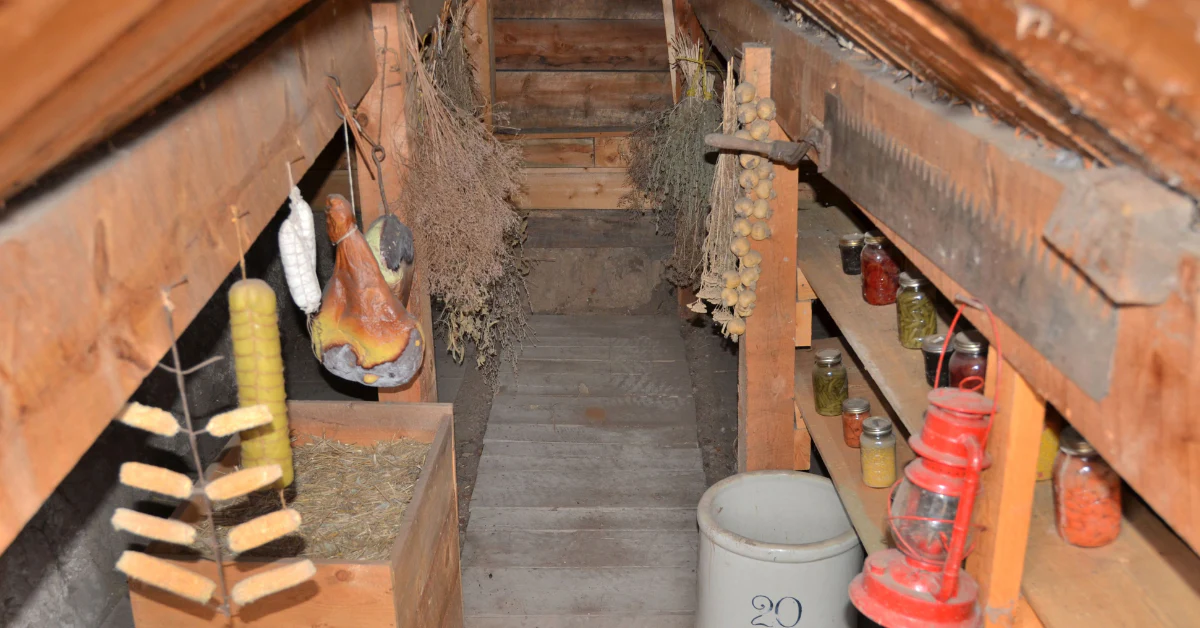
Root cellar storage works best when air can move around crates without blasting them. Put root crops low, where temperatures stay cooler. Use slatted wood crates, food-safe bins with vent holes, or wire baskets lined with breathable material. Do not pile produce deep unless you plan to inspect it often.
Carrots, beets, parsnips, and similar crops often prefer cold, moist conditions. Potatoes need darkness and airflow because light can trigger greening. Apples can give off ethylene gas, which can shorten the life of some vegetables, so give them their own shelf or bin. That one separation step feels fussy until you lose half a potato bin.
Onions, garlic, and winter squash need a drier zone than many root vegetables. Place them higher, away from damp bins. A small fan on a timer can help even out stale pockets, but do not aim it straight at produce. Gentle exchange beats direct wind.
Use washable shelf surfaces. Raw wood looks charming but can hold odor and moisture. If you use wood, choose sturdy boards, seal areas that will not touch produce, and keep removable crate liners. For more planning ideas, add this project to your seasonal pantry organization guide so the room fits your larger food system.
How do you protect bottles while storing food nearby?
Wine does not like heat swings, bright light, vibration, or strong odors. Aim for a steady wine cellar temperature rather than the coldest corner. Many wine educators point to the 50 to 59 degree range as a sound target for longer storage. A little warmer for short periods may not ruin a bottle, but repeated swings can age wine in a rough way.
Keep wine on horizontal racks if bottles have natural corks. Store screw-cap bottles any stable way that protects labels and keeps them easy to find. Avoid racks attached to walls that vibrate from HVAC equipment, laundry machines, or garage doors above.
Do not store onions, solvents, cleaning products, or gasoline-powered tools near wine. That sounds obvious until a basement rack ends up beside a utility shelf. Corks breathe more than people think. Keep the wine area clean, dark, and separate from high-humidity produce bins.
A mixed room can still work. Put wine on the more stable interior wall. Put damp produce low and closer to the exterior cold source. Keep canned goods in the driest zone. That layout does not look dramatic, but it behaves well.
Ventilation, Monitoring, and Maintenance After Construction
The build does not end when the door swings shut. A storage room changes with weather, harvest size, and how often you open it. Winter may cool the room beautifully. Spring may bring damp air. Summer may turn the same corner stale. Your system needs simple controls you can adjust without tearing walls open.
Beginners often want one perfect setting. Real rooms need a range. You watch the gauges, inspect the walls, smell the air, and make small changes. That habit keeps the space from becoming a forgotten basement cave with nice racks.
What ventilation setup works for beginners?
A passive vent pair can work in colder regions. Place one intake low and one exhaust high, ideally to the outside, with screens for pests and dampers for control. Cold outdoor air enters low, warmer air exits high, and the room breathes. That simple stack effect can cool the room during fall and winter.
In mild or humid climates, passive vents need caution. Pulling warm, wet summer air into a cool space can cause condensation. A vent that helps in Minnesota may hurt in coastal South Carolina. This is why dampers matter. You need the power to close outside air when it works against you.
Some homeowners add a small inline fan with a timer or thermostat. Keep it simple. The fan should exchange air, not blast the shelves. For a small room, short cycles often beat constant running. Put the switch outside the room so you can adjust it without leaving the door open.
Screens must be sturdy. Mice can turn a storage room into heartbreak fast. Use metal mesh, tight door sweeps, sealed pipe penetrations, and raised bins. If you see droppings, stop storing open produce until you find the entry point.
How do you keep the room safe through the year?
Log temperature and humidity once a week during the first season. Write the numbers on painter’s tape near the door or keep them in your phone. Patterns teach you more than guesses. If the room rises each time the dryer runs, you found a heat source. If humidity jumps after rain, check drainage.
Inspect produce every week. Remove soft, sprouting, bruised, or moldy items. Rotate older food to the front. Keep a small trash bin nearby so cleanup happens at once. Good root cellar storage depends on discipline more than design.
For basement food storage, canned goods need special care. Keep jars off the floor, away from freezing, and away from damp concrete. Label dates clearly. Do not store home-canned foods in a spot that swings hot in summer or drops below freezing in winter. When in doubt, follow tested canning and storage guidance from a university extension or the USDA-backed National Center for Home Food Preservation.
Clean the room between seasons. Empty bins, wash shelves, vacuum corners, and air it out during dry weather. Look for rust on metal racks, swelling shelf boards, condensation marks, and new cracks. Add your notes to a basement moisture control checklist so maintenance does not depend on memory.
Conclusion
A good cold storage room is not about copying an old farmhouse cellar board for board. It is about reading your own house and building a small space that respects water, air, temperature, and time. Start with the driest cool corner, then shape it with insulation, sealed gaps, controlled vents, and clean storage zones.
A well-planned basement cold room can hold more than food and bottles. It gives you steadier grocery planning, less waste, and a calmer way to store what your household already buys or grows. The smartest choice may be restraint. Build smaller, monitor harder, and keep the room plain enough to clean without excuses.
Once the first season teaches you how the room behaves, improve one thing at a time. Add better racks. Adjust vents. Move apples away from potatoes. Your house will show you what works. Listen to it, and build the room to serve real life.
Frequently Asked Questions
How cold should a basement storage room be for vegetables?
Most root vegetables keep best in a cold range near 32 to 40 degrees without freezing. Your exact target depends on the crop. Potatoes, carrots, beets, apples, onions, and squash do not all want the same humidity or shelf location.
Is a basement storage room good for wine?
Yes, if the temperature stays steady, the space stays dark, and odors stay away from the bottles. Wine prefers calm storage over extreme cold. Keep racks away from furnace rooms, laundry vibration, bright bulbs, and damp concrete walls.
Do I need a permit to build a cold storage room in my basement?
Many simple shelving projects do not need one, but framed walls, electrical work, exterior vents, insulation changes, and fire-rated materials may trigger local rules. Call your city or county building office before closing walls or cutting foundation openings.
What is the best wall insulation for a below-grade storage room?
Rigid foam or another moisture-tolerant insulation often works better than fiberglass against basement foundation walls. The assembly must control condensation and meet local fire rules. Avoid trapping damp concrete behind wood framing and plastic without a drying path.
Can I store canned food with fresh produce?
Yes, but keep canned goods in the driest, most stable part of the room. Fresh produce may need higher humidity, while jars and metal lids need protection from dampness. Use separate shelves and keep all canned goods off concrete floors.
Should a cold storage room have a dirt floor?
A dirt floor can help hold humidity for root crops, but many U.S. basements already have concrete slabs. You can manage moisture with bins, damp sand for certain crops, pans of water, or controlled humidification without opening the slab.
How do I stop mold in a basement storage room?
Control bulk water first, then manage humidity, airflow, and cleaning. Fix leaks, seal gaps, use washable shelving, remove spoiled produce fast, and monitor with a hygrometer. Mold prevention starts outside the foundation as much as inside the room.
Can one room store both wine and root vegetables?
Yes, if you create zones. Keep damp produce low and separated, place wine on a stable interior wall, and avoid strong-smelling foods near bottles. A mixed room needs monitoring because wine and vegetables prefer different humidity levels.