

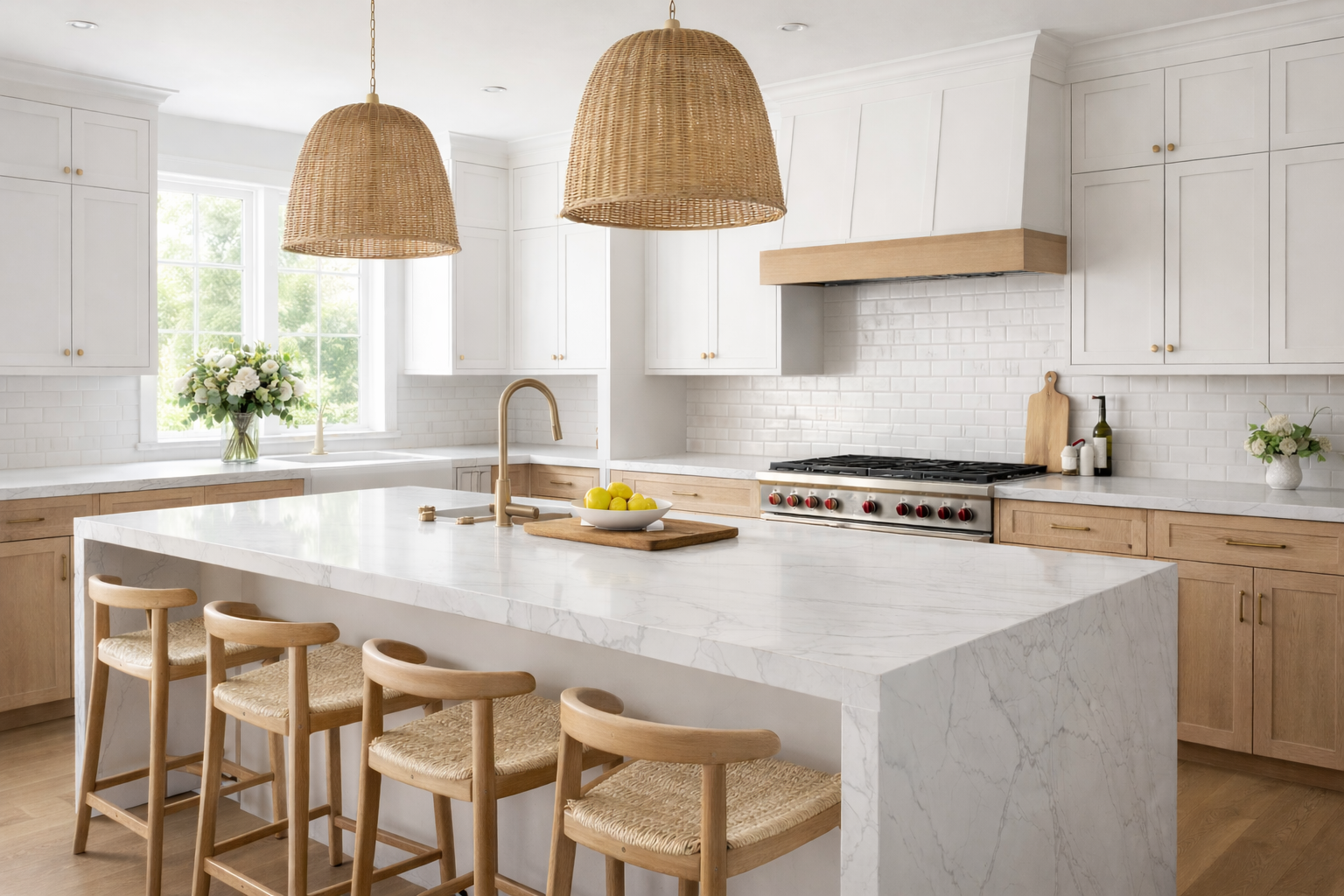
White quartz countertops continue to stand out in kitchen design because they combine a clean visual foundation with practical everyday performance. For homeowners planning a renovation, Hyundai L&C offers HanStone Quartz surfaces designed for kitchens and bathrooms, giving homeowners a range of colors, patterns, finishes, and thicknesses to consider.
The appeal of white quartz goes beyond its bright appearance. The right surface can influence how spacious a kitchen feels, how cabinetry looks, and how easily the room adapts to changing design preferences. When selected thoughtfully, white quartz can provide a long-lasting foundation for both classic and contemporary interiors.
Why White Quartz Countertops Remain Popular
White surfaces have a natural ability to make a room feel brighter and more open. In kitchens with limited natural light, a pale countertop can reflect available light and create a visually lighter environment.
That makes white quartz particularly useful in smaller kitchens, open-concept floor plans, and spaces where homeowners want a fresh, uncluttered appearance. It also provides flexibility when coordinating cabinetry, flooring, backsplashes, hardware, and appliances.
However, not every white quartz countertop creates the same effect. Some designs are crisp and nearly uniform, while others include subtle movement, gray veining, warm undertones, or more pronounced patterns.
This variety allows homeowners to choose a surface according to the character they want the kitchen to convey rather than treating white as a single design category.
White Quartz Countertops Offer More Than a Clean Look
A countertop has to withstand daily activity, not simply look attractive in photographs. Kitchen surfaces regularly encounter food preparation, spills, cleaning, heat, and general wear.
HanStone Quartz is positioned as a durable, low-maintenance surface and is described by its manufacturer as resistant to stains, scratches, heat, bacteria, and chipping. The material is also nonporous and does not require sealing or polishing as part of routine maintenance.
These characteristics can make quartz an appealing choice for homeowners who want a polished appearance without adding extensive countertop maintenance to their household routine.
Still, performance should always be evaluated according to the manufacturer’s care instructions and the specific demands of the installation. A durable surface benefits from appropriate cleaning practices and sensible use.
Choosing the Right White Quartz Design
The biggest mistake homeowners can make is selecting a countertop color based only on a small sample. White quartz can look substantially different depending on surrounding materials and lighting.
Before making a final decision, consider these factors:
- Cabinet color: White quartz can create a seamless appearance with white cabinetry or provide contrast against darker wood and painted finishes.
- Backsplash design: A simple backsplash can keep a heavily veined countertop from feeling visually crowded, while a patterned surface can complement a quieter quartz design.
- Flooring: Warm flooring can influence how a white countertop is perceived. A quartz surface with warmer undertones may create a more cohesive transition.
- Lighting: Natural and artificial light can affect how white, cream, gray, and beige undertones appear throughout the day.
- Overall style: Minimalist kitchens may benefit from subtle quartz patterns, while traditional or statement-making spaces can accommodate more dramatic veining.
Viewing physical samples is particularly valuable because digital images cannot always reproduce the exact appearance of a slab.
Consider Veining and Movement
A completely uniform white surface is not the only way to achieve a bright kitchen. Veined quartz can introduce depth while preserving the light foundation homeowners often want.
Gray-veined white quartz is especially versatile because it can connect white cabinetry with gray flooring, stainless steel appliances, brushed hardware, or darker accents.
For a softer appearance, homeowners can look for designs with delicate movement rather than strong contrast. For a more dramatic centerpiece, pronounced veining can create a visual focal point across a large island or expansive countertop.
Current HanStone offerings demonstrate how broad the category has become. Featured designs include creamy-white surfaces with gentle movement as well as options featuring more noticeable gray veining and natural-inspired variation.
This is one reason it is useful to think of white quartz as a design family rather than a single countertop color.
Match White Quartz to the Kitchen’s Architecture
The size and layout of a kitchen should influence countertop selection.
A small kitchen may benefit from a quieter white quartz pattern because fewer visual interruptions can make the space appear more cohesive. In a larger kitchen, a substantial island can provide enough surface area for more dramatic movement to become a design feature.
The countertop’s edge profile also matters. A simple edge can support a modern aesthetic, while a more detailed profile may work better with traditional cabinetry.
Thickness is another consideration. Available slab thicknesses and dimensions can affect the finished appearance, fabrication requirements, and installation details. HanStone Quartz provides different size and thickness options, with availability varying by color.
These decisions are best made alongside a fabricator or design professional who can account for the project’s measurements and installation requirements.
White Quartz Is Not Just for Kitchens
Although kitchens are one of the most common applications, white quartz can work throughout the home.
In bathrooms, a light quartz vanity can create a clean and coordinated appearance while pairing easily with tile, mirrors, cabinetry, and plumbing fixtures. The same material language can also be carried into other areas where a durable, polished surface is desired.
Using related quartz tones across multiple rooms can create continuity without requiring every space to look identical.
For commercial interiors, white quartz can similarly provide a refined visual foundation. HanStone Quartz is offered for both residential and commercial applications, giving designers flexibility when selecting surfaces for different environments.
How to Choose White Quartz With Confidence
Before ordering a countertop, take time to evaluate the material from both design and practical perspectives.
A useful checklist includes:
- Bring cabinet, flooring, and backsplash samples when viewing quartz.
- Examine full-size slabs whenever possible.
- Look at the surface under different lighting conditions.
- Consider how visible seams may be within the overall design.
- Ask about available slab sizes and thicknesses.
- Review edge profile choices before fabrication.
- Confirm care and maintenance recommendations.
- Discuss installation requirements with an experienced fabricator.
- Review the manufacturer’s warranty and product documentation.
This process can prevent a common renovation problem: choosing a beautiful countertop that does not work with the rest of the room.
Think Beyond Trends When Selecting White Quartz
Kitchen trends change, but a countertop is usually a long-term purchase. That makes timeless design more valuable than simply choosing whatever color happens to be popular at the moment.
White quartz has remained relevant because its neutral foundation can adapt to changing décor. Cabinet hardware can be replaced, wall colors can change, and furniture can be updated without necessarily requiring a countertop replacement.
At the same time, timeless does not have to mean plain. Natural-inspired veining, subtle movement, and layered tones can provide personality while maintaining broad design flexibility.
The key is choosing a pattern that complements the architecture and materials already present in the space.
A Better Way to Evaluate White Quartz Countertops
The best countertop decision balances three considerations: appearance, performance, and long-term practicality.
Start by determining the visual direction of the room. Then compare quartz designs based on undertones, veining, movement, and how they interact with cabinetry and lighting.
Next, consider everyday performance. A countertop should suit the way the household actually uses the kitchen rather than being selected entirely for its appearance.
Finally, investigate the product itself. Manufacturer information about material characteristics, care, available sizes, thicknesses, warranties, and fabrication can provide useful context before making a purchase. HanStone Quartz provides resources covering installation, edge profiles, sizes, thicknesses, care, maintenance, warranties, and certifications.
Create a Kitchen That Works for Everyday Life
White quartz countertops can provide the visual clarity many homeowners want while supporting the practical demands of a busy kitchen. Their broad range of patterns means homeowners can choose between understated surfaces, soft movement, and dramatic veining without abandoning the brightness associated with white countertops.
The smartest choice is not necessarily the whitest slab or the boldest pattern. It is the surface that fits the room, complements the surrounding materials, meets the project’s functional needs, and remains appealing as design preferences change.
Before committing to a countertop, view available colors and samples, review product specifications, and speak with a qualified local dealer or fabricator about your project. For current HanStone Quartz colors, product information, design resources, and dealer locations, visit Hyundai L&C USA.