
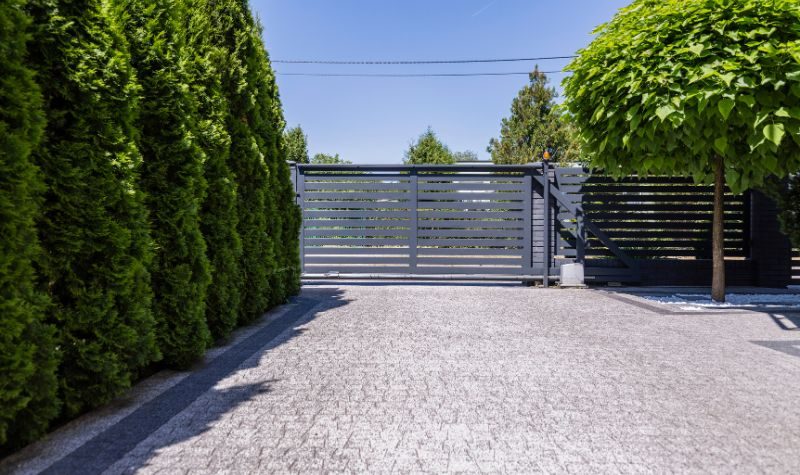
The weakest opening around many homes is not the front door. A side yard gate often sits beside the garage, away from porch lights, cameras, and the normal path guests use, which makes it matter more than its size suggests. For most U.S. homeowners, the goal is simple: block casual views, slow unwanted entry, and still move trash cans, bikes, tools, and pets without a daily fight.
The best garage passage gate starts with layout, not lumber. Before you buy a panel or post, walk the route from the driveway to the backyard and notice where your shoulder catches, where water pools, and where a stranger could stand unseen. A poor gate turns that narrow strip into a jammed, noisy shortcut that everyone learns to ignore. Good home exterior planning resources help because this project touches privacy, drainage, security, and curb appeal in one small strip of land. A clean plan also keeps you from buying a beautiful gate that sags by fall.
Read the Space Before You Pick the Gate
A narrow strip beside a garage can fool you. It looks like a simple opening until you measure the slope, siding overhang, gas meter, downspout, fence return, and concrete edge. That is where many gate projects go wrong. Small margins rule here. The gate gets treated like a panel with hinges, when it is closer to a tiny outdoor door that must fight weather, gravity, and daily use. Start by accepting that the passage has limits, then design around them instead of forcing a catalog gate into a stubborn spot. Measure twice at different times of day, too. A parked truck, an open garage door, or bins waiting for pickup can change how the space feels.
Check the garage wall, fence line, and walking path
Start with the real path you use, not the path that looks neat on paper. The body remembers tight corners better than a tape measure does. A homeowner in Ohio may need enough clearance for a 96-gallon trash cart, while a family in Arizona may care more about moving pool supplies and yard tools. In both cases, a 30-inch opening can feel tight fast. A 36-inch clear opening handles more chores without making the gate feel oversized.
Measure the full swing, then measure the usable opening after hinges, trim, latch, and stop blocks take their share. This small detail catches people off guard. A gate that is sold as 36 inches wide may not give you 36 inches of open space, especially if the posts sit inside the existing fence line. Mark the swing on the ground with chalk and walk it with a trash cart before buying anything. If the cart clips the garage trim during the test, the finished gate will not get kinder.
Check the property line before digging. In many U.S. cities, fence and gate rules depend on height, front-yard visibility, corner lots, and setbacks. The King County Sheriff’s yard security guidance also reminds homeowners to check what fencing is allowed before enclosing side and rear yards. Your city or HOA may be stricter, so use a fence permit checklist before ordering materials.
Plan privacy without creating a hiding spot
Most people want a taller solid gate because it blocks the neighbor’s view and hides garbage bins. That sounds right. The catch is that a wall-like gate can also create a blind pocket beside the garage. If someone can step behind it and disappear from the street, privacy has started working against garage gate security.
A smarter layout blocks the view from common angles while keeping the approach visible from a window, camera, or motion light. That may mean a solid lower section with a small open pattern near the top, or a gate set slightly forward so the latch side stays in sight. The best privacy is selective. It hides your yard without hiding a trespasser. That choice also helps neighbors, because a gate that looks intentional feels less like a barricade.
Look at shadows at night, not only during a sunny afternoon. A brown cedar gate may look warm at 3 p.m. and turn into a dark slab after sunset. Add a low-glare light over the garage corner or aim a motion fixture across the latch area. This one move can make a backyard privacy fence feel safer without making the yard feel watched.
Garage Side Yard Gate Installation That Balances Security and Privacy
The strongest gate is not always the heaviest one. Weight feels secure in the store, but weight becomes a problem when a post is shallow, soil is soft, or hinges are too small. Good building is less dramatic. It is plumb posts, enough concrete, bracing that resists sag, and gate latch hardware that matches how the entry gets used on a wet Tuesday night. If the gate becomes hard to close, the household will stop trusting it, and security slips away in ordinary moments. A locked gate that gets left open is weaker than a modest gate that shuts with a soft click every time.
Set posts for strength, not for looks
Gate posts need more respect than fence posts because they carry moving weight. The latch post takes impact every time the gate closes. The hinge post carries the load all day. If either one leans, the gate starts dragging, and people begin lifting it by hand. That is the start of failure.
For a typical 6-foot wood gate beside a garage, a 4×4 post may work in firm soil with a light panel, but a 6×6 post gives more forgiveness. In clay-heavy parts of Texas or the Midwest, soil movement can twist a weak post after a wet season. In colder states, frost can push shallow footings out of position. The post hole should fit your climate and soil, not a one-size rule from a label.
Do not fasten a heavy gate straight into garage siding. The wall may look solid, yet the trim may be thin, the sheathing may not hold lag screws well, and the framing may not sit where you expect. If you must tie into the garage side, find framing, use proper anchors, and keep water out of every drilled hole. A freestanding hinge post beside the wall often gives cleaner results. It also makes future siding repair or repainting less painful, since the gate is not welded to the house by hardware and caulk.
Match latch, hinge, and lock choices to daily use
A gate that protects well but annoys you will be left unlatched. That is why daily use matters as much as strength. If kids take bikes through the passage, the latch height should be reachable without turning the gate into an easy climb point. If the path leads to a dog run, the latch should close by itself and resist paw pressure.
Gate latch hardware comes in simple gravity latches, two-sided thumb latches, keyed latches, and lockable hasp setups. For many homes, the best mix is a self-latching unit with a padlock option. It closes during daily chores, then locks when you leave town. That is better than a fancy lock that sits open because it slows everyone down.
Hinges deserve the same care. Use exterior-rated hinges sized for the gate’s weight, not the cheapest pair in the bin. Adjustable hinges cost more, yet they can save the gate after a season of settling. A half-turn on the adjustment can lift the latch side enough to stop rubbing. That small future fix is worth planning now, especially for garage gate security in a busy household. It is far cheaper to adjust a hinge than rebuild a post after months of dragging.
Materials, Drainage, and Weather Details That Decide Lifespan
Material choice gets most of the attention, but water decides the life of the job. A cedar gate, vinyl panel, steel frame, or composite board can all fail early if the bottom edge sits in splashback or the posts trap moisture. The side of a garage often has poor air flow, downspouts, AC lines, and shade. Those conditions punish shortcuts. The gate may look like a fence piece, but it lives more like exterior trim near the ground, which is a harsher job. Pick materials for the worst corner of the passage, not for the prettiest part of the fence run.
Choose wood, vinyl, composite, or metal by climate
Wood looks natural and fits many older neighborhoods. Cedar and redwood resist decay better than common pine, though they still need sealing and end-grain care. In the Pacific Northwest, shade and rain make that maintenance more than cosmetic. Skip it, and the lower rail can soften while the top still looks fine.
Vinyl has a cleaner wash-and-go appeal, and it can suit suburban lots where white fencing already frames the yard. The weak point is not rot. It is movement, impact, and poor internal support. A vinyl gate without a stiff frame can rack out of square after repeated slams, especially near a garage where wind funnels through the passage.
Metal frames with wood or composite infill often give the best mix for a narrow garage run. The frame fights sag, while the infill provides privacy. The non-obvious part is that a lighter infill inside a strong frame may outlast a thick all-wood slab. Less weight means less hinge stress, and less hinge stress means fewer alignment problems. That matters in a tight passage where even a half-inch of sag can make the latch miss.
Keep water, soil, and sprinklers away from the weak points
Look down before you build up. If the side yard slopes toward the garage, a gate can become a dam for leaves, mulch, and stormwater. Leave a safe bottom gap so water and debris can move through. Too small a gap invites rot and rubbing. Too large a gap lets pets nose under it. The right number depends on the surface, but the point is the same: the bottom edge should not live in dirt.
Sprinklers are another quiet enemy. A spray head that hits the latch side every morning can stain hardware, swell wood, and leave mineral marks on vinyl. Redirect the head before installation, not after the new gate starts showing damage. In desert states, irrigation overspray can do more harm than rain. Near the Gulf Coast, salt air can also age cheap screws and hinges before the boards show wear.
Seal all cut ends on wood boards before assembly. Most people stain the face and forget the ends, which drink water faster. That hidden edge is where decay starts. For a backyard privacy fence connection, match the finish, but do not copy bad habits from the old fence. The gate is a moving part, so it needs better protection than a fixed run of boards.
Finish the Opening So It Works Every Day
A gate can be square, strong, and still feel wrong. The final inches decide whether it becomes part of the home or a chore you avoid. Swing direction, latch feel, lighting, stops, and small clearances shape the user experience. This is the part where careful installers slow down. A neat finish also helps resale because buyers notice a gate that opens with one hand and closes without a shove. They may not praise it out loud, but they feel that the home has been cared for.
Make the swing, latch height, and lighting feel natural
Most side entries work best when the gate swings inward toward the yard, away from the driveway path. That keeps the driveway open and reduces the chance that the gate blocks a sidewalk or shared approach. But slope can change the answer. If the ground rises toward the backyard, an inward swing may scrape, so a different hinge style or a small landing may make sense.
Set the latch where your hand falls while carrying a bag, hose, or child’s scooter. That sounds minor until you come home after dark and fumble at a latch hidden behind a post. A small handle on the pull side can make the gate feel like a real door instead of a fence panel with hardware attached. If guests or a lawn crew need access, label the latch motion in a subtle way or choose hardware they can read by touch.
Lighting should reveal the latch, not flood the neighbor’s bedroom. A shielded fixture under the garage eave or a motion light aimed down across the gate works better than a harsh lamp facing outward. For garage gate security, light at hand level matters more than light everywhere. You want clear action at the latch, not glare in your eyes.
Inspect, adjust, and maintain before failure shows
The best time to fix gate movement is before it annoys you. Check the top gap, latch gap, and bottom clearance a month after installation, then again after the first hard weather shift. Wood dries, soil settles, and hardware seats under weight. A small adjustment early prevents a larger repair later.
Tighten hinge fasteners when needed, but do not keep driving screws into tired holes. If a screw spins, repair the hole with an exterior-rated plug or move to a proper through-bolt where the design allows. This is where gate latch hardware and hinge hardware separate a lasting build from a weekend patch. Keep the original fastener sizes written down so replacements match the load instead of guessing at the store.
Keep the area around the gate boring. Trim shrubs back from the latch, move stacked bins away from the climb side, and keep gravel or pavers level under the swing. A clean passage looks less inviting to intruders and works better for you. Strange as it sounds, the best security feature may be a gate that closes easily every single time. Ease is not softness here. It is what keeps the barrier doing its job.
Conclusion
A secure garage-side entry is not built by buying the tallest panel on the rack. It comes from reading the space, setting posts that can carry moving weight, choosing hardware people will use, and shaping privacy so it does not create a hidden corner. The smartest projects feel ordinary after they are done, because the gate opens, closes, drains, locks, and lights the way without asking for attention.
That is the real test of Garage Side Yard Gate Installation for Security and Privacy: it should make the home feel calmer without making daily life harder. Spend more care on the hinge post, latch area, bottom clearance, and water path than on decorative extras. Those are the parts that decide whether the gate still feels solid after two summers and one rough winter. Build the opening like a small exterior door, not a fence afterthought, and you will notice the difference each time you come through. Start with the space you have, then make every choice serve that space.
Frequently Asked Questions
How wide should a garage passage gate be for trash cans and yard tools?
A clear opening of about 36 inches works well for many homes because it fits common trash carts, mowers, bikes, and garden tools. Measure the widest item you move through the space, then add room for your hands and hinges.
Is a wood or metal gate better beside a garage?
A metal frame with wood or composite infill often performs better than an all-wood slab. The frame helps resist sag, while the infill blocks views. Wood alone can work well when the posts, bracing, finish, and bottom clearance are handled carefully.
Do I need a permit to install a gate near my garage?
Many cities treat gates as part of fence work, so permit rules may depend on height, location, corner visibility, and zoning. Check your building department and HOA before digging. A small project can still violate a setback or sightline rule.
What is the best latch for a secure yard gate?
A self-latching exterior latch with a lock option suits many homes. It closes during normal use and can be locked when needed. Choose hardware rated for outdoor exposure, and place it where household members can use it without leaving the gate open.
Should the gate swing toward the driveway or the backyard?
An inward swing toward the backyard usually keeps the driveway path cleaner and safer. Slope, tight walkways, and local rules can change that. Test the swing with a board or tape outline before setting posts in concrete.
How can I add privacy without making the area unsafe?
Block views from the street or neighbor’s window, but keep the latch approach visible from a light, camera, or house window. A fully solid gate can create a hiding pocket if placed poorly, so privacy should be planned by angle.
How far off the ground should the bottom of the gate sit?
The bottom gap should clear the walking surface, shed leaves, and avoid standing water while still containing pets. Many homes need more gap over gravel or uneven pavers than over flat concrete. Test the swing before final hardware placement.
How often should I maintain a garage-side entry gate?
Inspect it after the first month, after major weather changes, and at least twice a year. Look for loose hinges, latch misalignment, swelling wood, rust, soil buildup, and sprinkler spray. Small fixes keep the gate easy to close.