Most bathroom falls do not happen during a dramatic moment. They happen during small shifts: turning to reach a towel, stepping out with wet feet, or lowering onto a toilet when one knee feels weak. A planned grab bar installation gives your hand a fixed place to land before balance turns into panic. That is the heart of aging in place bathroom safety: not making the room look medical, but making ordinary movement less risky. In many U.S. homes, the bathroom is still built around speed, shine, and tight corners. Older adults need something different. They need support where bodies twist, rise, step, and pause. The National Institute on Aging’s room-by-room fall prevention advice points homeowners toward bars near toilets and on both the inside and outside of tubs and showers, which matches what families learn after one scary slip: placement matters more than good intentions. This guide walks through where bars belong, how walls affect the job, and why a safe bathroom should feel natural to use.
Why Bathroom Support Starts With Real Movement, Not Hardware
A bar is not safe because it is made of stainless steel. It is safe because it sits where someone reaches under stress. That one idea should guide every choice you make. Many homeowners shop first, drill second, and think about body movement last. That order creates bars that look tidy but miss the moments that matter. Aging in place bathroom safety starts by watching the room like a person uses it, not like a product photo shows it.
Map the risky motions before choosing the bar
Stand in the bathroom and act out the day. Step toward the shower. Turn to close the curtain or door. Reach for shampoo. Shift weight to step out. Sit on the toilet, then stand again without pushing off the sink. These small moves show where a hand will hunt for balance.
The most dangerous spot is often not the wettest one. It is the point where your body changes direction. A person may enter the shower safely, then wobble while turning to face the water. Someone may stand from the toilet, then lose balance while pulling clothing into place. That is why shower grab bars and toilet support bars should answer movement, not match a showroom layout.
A good test is simple. Where would your hand go if the light were dim and one foot slipped? If the answer is a towel bar, glass door, faucet, or vanity edge, the room is asking for trouble. Those items were not built to catch body weight.
Respect fear without designing around panic
After a fall, families often want bars everywhere. The instinct makes sense. Still, too many bars in the wrong places can make the room harder to read. A wall crowded with hardware may give several handholds but no clear path. The safer plan is fewer bars placed with purpose.
Think of a common ranch house bathroom in Ohio or Pennsylvania. The tub sits against three walls, the toilet has a vanity on one side, and the floor space is tight. In that room, one strong vertical bar at the tub entry may do more good than a long bar placed too far back. The user needs help during the step, not after both feet are already inside.
The non-obvious point is that confidence can be as useful as strength. When someone knows exactly where the handhold is, the body moves with less hesitation. Less hesitation means less awkward shifting. Safer rooms feel calm, not crowded.
Grab Bar Installation That Fits Real Bathroom Movement
Once you understand the movements, the wall becomes the next concern. A beautiful bar attached to weak drywall is decoration. It may hold a towel, but it should never be trusted with a body. The best work happens when location, wall framing, bar shape, and user height all meet in the same decision. That sounds fussy, but it saves you from the most common mistake: putting the bar where the wall allows it instead of making the wall ready for the bar.
Find structure before drilling into tile or drywall
Grab bars need strong anchoring. Studs are the cleanest answer when the layout works. In many U.S. homes, studs sit 16 inches apart, but bathrooms do not always cooperate. Plumbing walls, old remodels, plaster, tile backer, and odd framing can throw off easy measurements. Use a stud finder, but do not trust it alone on tile. Check from the other side of the wall if possible, such as a closet or hallway.
When studs do not line up with the best location, use mounting systems rated for grab bars and the wall type. Do not swap in a random hollow-wall anchor because it came with another shelf kit. A support bar faces twisting force, not only straight pulling force. That difference matters when a person grabs it during a slip.
A contractor may open the wall and add blocking, especially during a bathroom remodel. That is often the best choice for long-term aging in place bathroom safety. If you are already replacing tile, add wood backing at likely bar locations before the wall closes. Future you will be grateful.
Choose bar types by task, not by looks alone
Horizontal bars help with sliding the hand along a path. They work well beside toilets and along shower walls. Vertical bars help with stepping in, pulling forward, and catching balance during entry. Angled bars can help some users rise from seated positions, but they need careful testing because the wrist angle may feel odd.
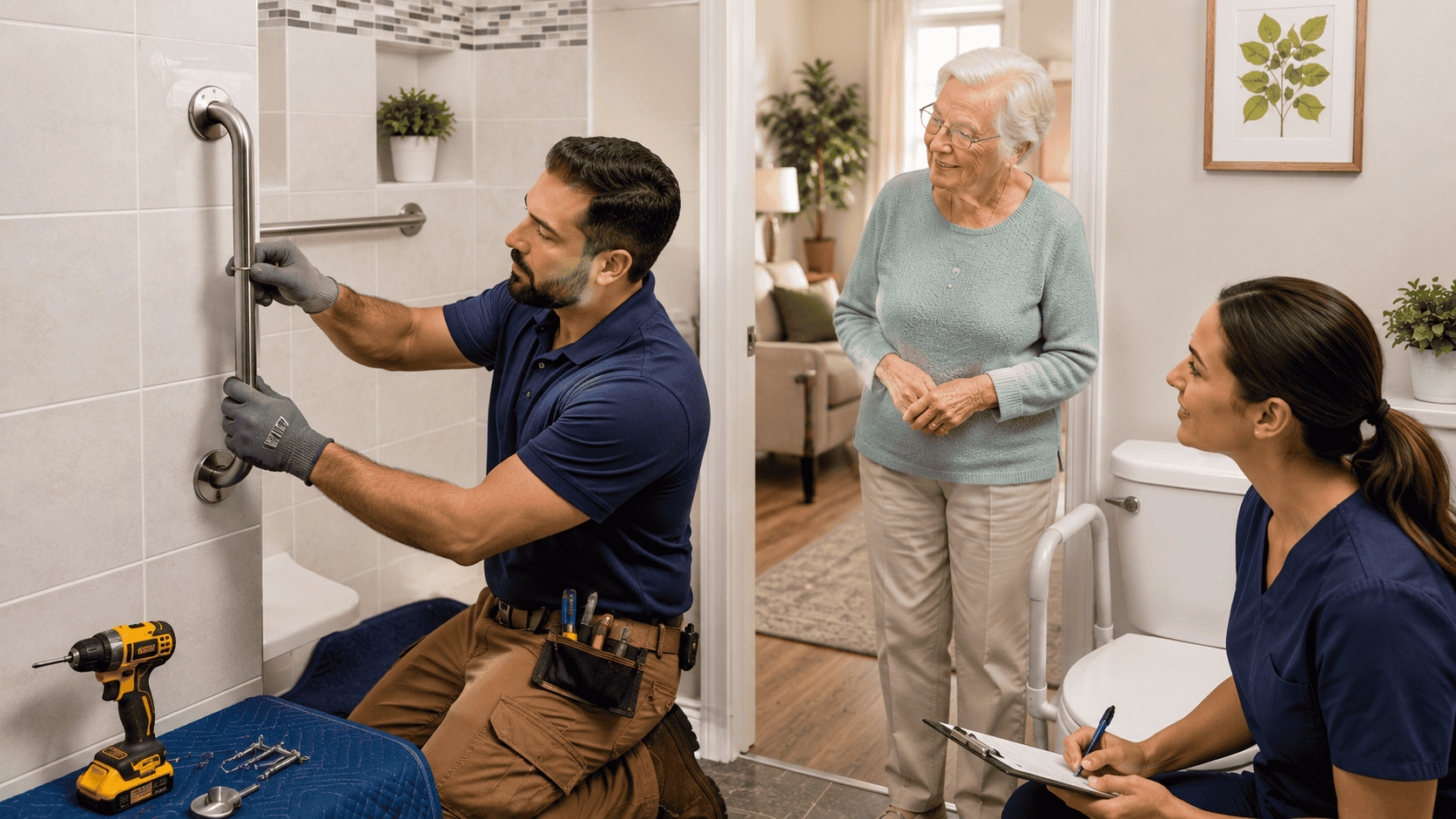
For shower grab bars, a common setup includes a vertical bar near the entry and a horizontal bar on the side wall. In a tub-shower combo, the entry step is a major risk point because the foot must clear the tub wall. A vertical bar near that edge gives a natural handhold during the climb. A side-wall bar helps once the person is standing inside.
Toilet support bars need the same task-based thinking. A side-wall bar helps with sitting and standing when the toilet sits near a wall. A rear bar may help with balance and turning, though it may not give the same push support. If the toilet has open space on both sides, fold-down rails may work better than wall-mounted bars, especially when two people share the bathroom with different needs.
Placement, Height, and Code Ideas That Keep the Room Practical
Placement rules give you a starting point, but real homes need judgment. ADA guidance for public accessible bathrooms often places grab bars in the 33- to 36-inch range above the finished floor, and the U.S. Access Board gives detailed rules for toilet room layouts and bar lengths. Private homes do not have to copy every public restroom rule. Still, those numbers are useful because they come from tested access standards. The better approach is to begin with known ranges, then test the exact spot with the person who will use the room.
Set height around the user’s reach and routine
A bar that sits too high makes the shoulder work too hard. A bar that sits too low forces the user to bend at the wrong moment. Neither mistake looks huge on installation day. Both can show up later during tired evenings, early mornings, or recovery after surgery.
Have the person stand in the shower or beside the toilet while wearing normal footwear or bare feet, depending on the task. Ask them to reach without stretching. Mark that spot. Then compare it to common access ranges. If the mark is far outside the range, ask why. Height, arm length, arthritis, balance, and transfer style may explain the difference.
Here is the quiet truth: the “standard height” may be wrong for the one person who matters. A 5-foot-2 woman with shoulder pain and a 6-foot man after hip surgery may need different support. When one bathroom serves both, choose the height that supports the weaker or more frequent user, then add a second bar if the tasks conflict.
Keep clear space around the handhold
A grab bar needs room around it. The hand must wrap the bar without hitting a soap dish, shower caddy, window trim, toilet paper holder, or vanity top. This sounds small until wet fingers meet a cramped gap. Then the bar loses part of its value.
In older bathrooms, built-in ceramic soap dishes often sit exactly where a good side-wall bar should go. Do not let that little fixture control the safety plan. It may be worth removing the soap dish, relocating storage, or switching to a recessed niche during a remodel. A $20 caddy should not outrank a safer reach.
For tubs, place support near the entry and along the wall where the bather turns. For walk-in showers, think about the route from dry floor to wet floor and back again. For toilets, avoid placing a bar so far behind the user that standing requires a twist. Twisting while rising is a bad trade.
Materials, Fasteners, and Finishes That Stand Up to Daily Use
Hardware quality matters, but not in the flashy way stores sell it. The finish can match the faucet, yet the more serious questions are grip, diameter, texture, screw type, mounting plate, and cleaning. A bathroom is a damp room with soap film and skin oils. Smooth metal can feel slick at the wrong time. Good equipment should feel secure in a tired hand, not only look pleasant in a staged photo.
Pick a surface that wet hands can trust
Peened, knurled, or lightly textured bars offer more grip than slick polished ones. Some people dislike aggressive texture because it feels rough on thin skin. That is fair. The answer is not always the roughest bar. It is the bar that the user can hold with comfort and control.
Diameter matters too. Many people grip bars in the 1¼- to 1½-inch range well, but hand size and arthritis change the preference. A bar that feels perfect to the installer may feel bulky to an older adult with stiff fingers. Before buying every bar, test one in hand. Hold it with dry hands, then with slightly damp hands.
Color contrast can help more than people expect. A chrome bar on pale gray tile may disappear in low light. A matte black or warm metal bar against light tile may be easier to spot. This is not only a design choice. It can help anyone with weaker vision find support faster.
Avoid the towel-bar trap
A towel bar looks like a handhold when someone starts to fall. That is why it becomes dangerous. It invites trust it cannot repay. Many towel bars attach with tiny brackets and light anchors. They may tear out under body weight, leaving sharp hardware and a harder fall.
A practical fix is to replace towel bars near the tub, shower, or toilet with rated grab bars that can also hold towels. This keeps the room from looking clinical and removes a false support point. In a Florida condo or a small New Jersey cape, that one swap may protect a guest who does not know the room.
Fasteners should match the wall and bar rating. Stainless screws resist corrosion. Mounting plates should sit flat. Seal penetrations in wet areas so water does not creep behind tile. The hidden enemy is not always the first slip; sometimes it is slow water damage that weakens the wall over years.
Planning the Project So It Looks Good and Ages Well
A safe bathroom should not feel like a warning sign. Many people resist bathroom safety bars because they imagine a hospital look. That reaction is human. The room is personal. It is where people start the day, recover from long hours, and keep dignity intact. Better planning turns support into part of the room instead of an afterthought bolted on during a family crisis.
Blend safety upgrades into a normal remodel
If you are planning new tile, paint, flooring, lighting, or a vanity, include bars before the design is finished. That timing opens choices. You can add blocking, choose bar finishes that match fixtures, adjust shower controls, and place storage where it does not compete with handholds.
For more planning ideas, pair this project with bathroom remodeling planning tips and home safety upgrades for older adults. The best rooms solve several small hazards at once: slippery rugs, dim lighting, high tub walls, low toilets, and poor storage. A bar helps, but it should not carry the whole safety plan alone.
The non-obvious design move is to install some support before it is needed. Waiting until after a fall turns a calm project into an emotional repair. Early planning lets the older adult choose the look, test the reach, and keep control of the decision.
One quiet design habit helps here: treat the bar like part of the trim package. Match the finish, line it up with tile joints when possible, and keep nearby shelves out of the grip path. When support looks intentional, people use it sooner. That matters because many older adults avoid aids that make them feel watched or managed.
Know when to hire a pro
A handy homeowner can install a bar when the framing is clear, the wall type is simple, and the location is dry. Tile walls, fiberglass surrounds, unknown framing, plumbing walls, and rental properties raise the risk. The cost of a pro often looks smaller when compared with cracked tile, hidden leaks, or a bar that pulls loose.
Renters should ask the landlord in writing before drilling. Some landlords will allow safety modifications, especially when the work is done by a licensed contractor and the finish is left clean. Homeowners in condos may need association rules checked before work starts, mainly when plumbing walls or shared structures are involved.
Ask any installer how the bar will be anchored, what weight rating applies, and how wet-area holes will be sealed. A vague answer is a red flag. You are not buying decoration. You are buying trust at the exact moment balance fails.
A final inspection should be physical, not polite. Grip the bar with both hands and pull in the same direction a person might pull while standing. Check for movement, flex, gaps at the mounting plate, or cracked grout. Small warning signs deserve attention before the room goes back into daily use.
Conclusion
The best bathroom safety work does not begin with fear. It begins with respect for how people move when they are tired, wet, stiff, or unsure of their footing. A careful grab bar installation can turn the most stressful points in the room into steady, familiar motions. The point is not to cover every wall with hardware. It is to give the hand a strong answer at the moment the body asks for one. Start with the shower entry, the toilet rise, and the path back to dry floor. Match the bar to the task, anchor it into real strength, and keep the design clean enough that nobody feels punished by the upgrade. Aging at home should not depend on luck or a towel bar pretending to be support. Walk the room today, mark the danger points, and make the safer choice before a fall makes the decision for you.
Frequently Asked Questions
How much does it cost to install bathroom grab bars?
Most simple projects cost less when studs are easy to reach and the wall is drywall or standard tile. Costs rise with tile drilling, added blocking, fiberglass surrounds, or custom bars. Labor often matters more than the bar price because anchoring decides safety.
What is the best height for shower grab bars?
Many installations start around the 33- to 36-inch range, then adjust for the user’s reach and balance. The right height should let the hand land without shoulder strain or bending. Test the position before drilling any holes.
Can grab bars be installed in a fiberglass shower?
Yes, but fiberglass needs the right backing or mounting system. A bar screwed only into thin fiberglass can fail under force. Use hardware rated for the surround type, or hire a pro who can anchor through to structure.
Are suction cup grab bars safe for older adults?
They may help as a light balance cue, but they should not be trusted for body weight. Suction can loosen from moisture, texture, soap film, or age. For fall protection, choose permanently anchored bars rated for support.
Where should toilet support bars be placed?
Side-wall support usually helps most with sitting and standing. A rear bar may help with turning or balance. The best location depends on toilet position, wall distance, user strength, and whether transfers happen from a walker or wheelchair.
Do grab bars make a bathroom look medical?
They do not have to. Many rated bars now come in finishes that match faucets, towel rings, and shower trim. A well-placed matte black, brushed nickel, or warm metal bar can look like part of the design.
Can I install bathroom safety bars myself?
You can when you know the wall structure, have the right tools, and can anchor into studs or rated fasteners. Tile, fiberglass, plaster, and plumbing walls make the job harder. When in doubt, pay for a safer install.
Should I add grab bars before an older parent needs them?
Early installation is often the smarter choice. It lets your parent test placement, choose the style, and avoid rushed decisions after a fall. Safety upgrades feel less upsetting when they are part of normal home planning.